


What comes back
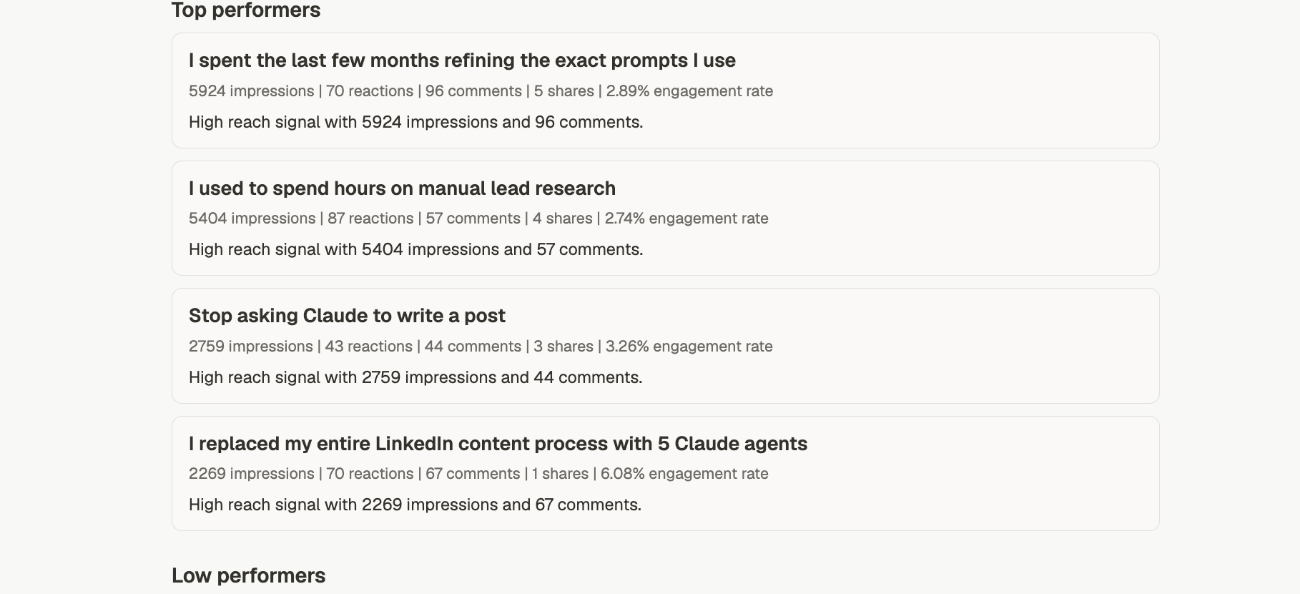
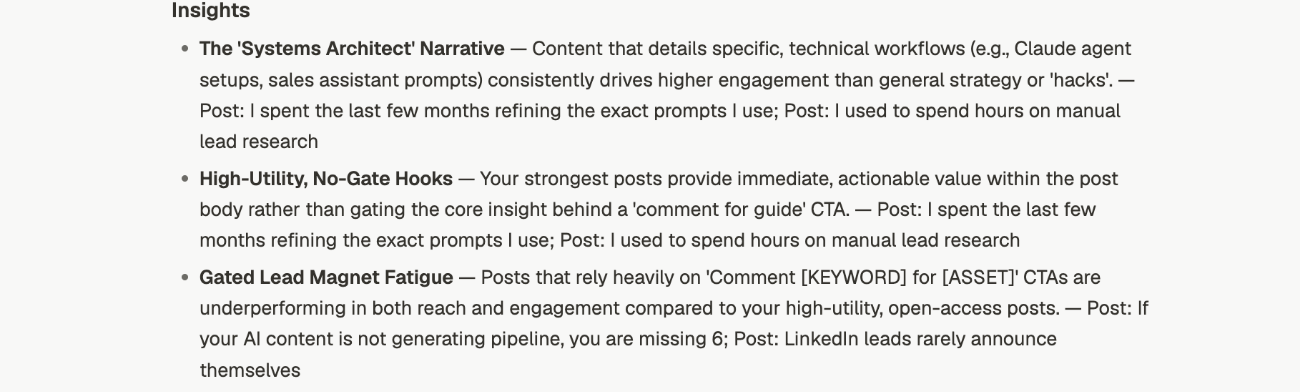
An analysis opens with the answer, not the workings. You get a read on your positioning, then what worked and what didn’t, each quoting the post it’s talking about.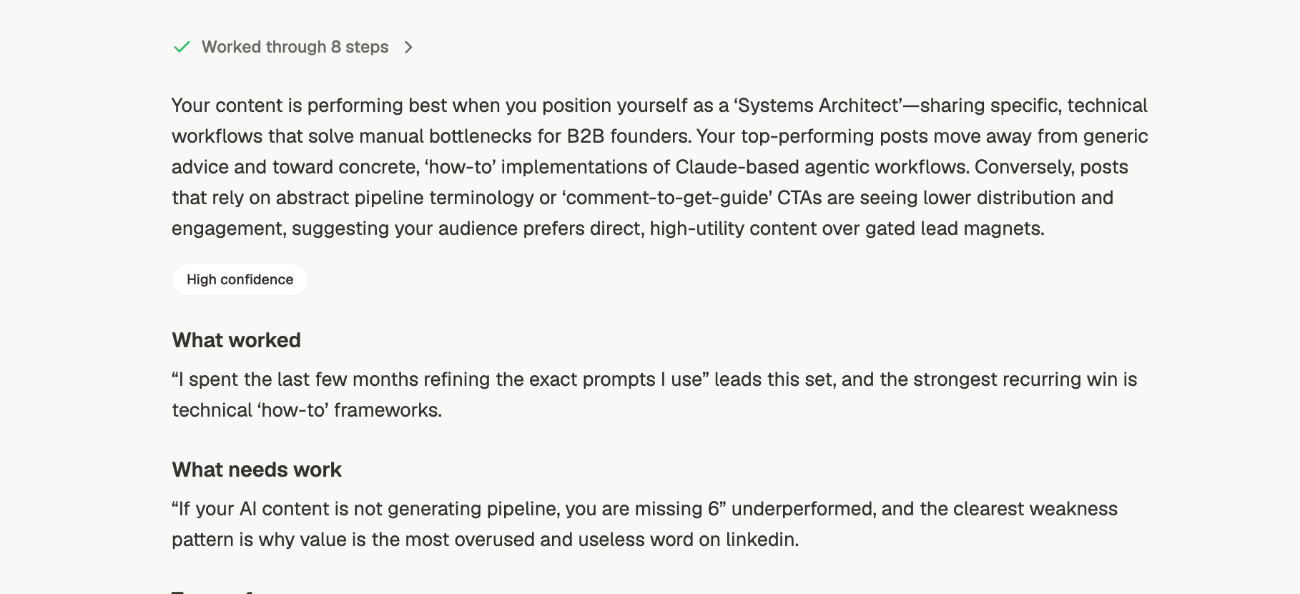
What you can ask for
That last row matters more than it looks. You aren’t limited to fixed reports — you can
ask an open question about your own content and get an answer rather than a template.
Some of these need history
Analysis works from your material, so a new workspace has less to work with:- Profile, voice patterns, content gaps work as soon as your brand is set up
- Recent posts, best posts, performance need published history and synced analytics
If an analysis comes back thin, the usual cause is not enough published history rather
than a bad question. Check what’s in Analytics first.
Getting a sharper answer
Say the timeframe
Say the timeframe
“Analyze my recent posts” is vaguer than “analyze my posts from the last 90 days”.
Naming a window changes what gets looked at.
Say what the answer is for
Say what the answer is for
“Analyze my posts” gets a general read. “Analyze my posts — I want to know why my
reach dropped in June” gets an answer to your actual question.
Narrow the context
Narrow the context
Analysis of your own content usually doesn’t need Viral Posts or Web Search.
Turning them off keeps the answer about you. See context.
Related
Find what's trending
Look outward — viral patterns and how you compare.
Get ideas and angles
Turn a read on your content into things to write.
Give chat the right context
Control what the analysis looks at.
Analytics
The numbers behind performance analysis.