

Study the patterns
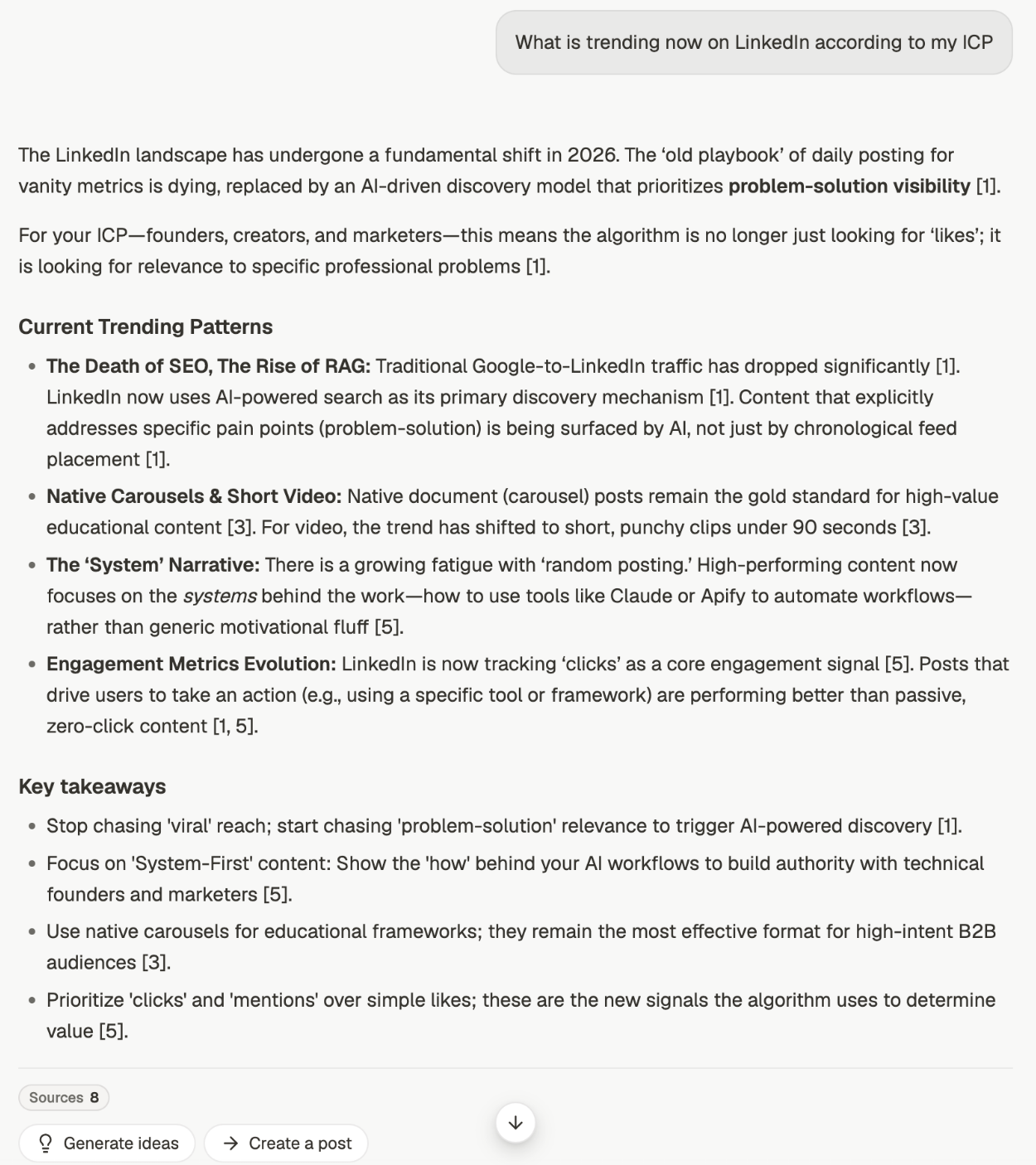
Ask about trends when you want to understand what’s working, without generating anything yet.- “What’s working on LinkedIn in my space right now?”
- “What hook structures are showing up in viral posts about AI?”
- “What formats are getting engagement for B2B founders?”
Compare yourself against them
Benchmarking is the more useful of the two. It takes your posts and your performance, holds them against the patterns, and explains the gap.- “How do my posts compare to what’s going viral in my space?”
- “Benchmark my recent posts against viral trends and tell me what I’m missing”
- “What are top creators in my niche doing that I’m not?”
Benchmarking needs your published history and performance data. Without them there’s
nothing on your side of the comparison — you’ll get trend analysis instead.
Patterns, not copies
The point is structural. A viral post about someone else’s layoffs is not a template you can fill in — the thing worth borrowing is why it opened the way it did, not what it said.1
Ask what's working and why
Get the pattern named — the hook shape, the structure, the kind of proof it used.
2
Ask how you compare
Benchmark it against your own posts so the gap is concrete rather than aspirational.
3
Then ask for your version
In the same thread, ask for ideas or a draft. It carries the pattern without copying
the post.
Related
Analyze your content
The inward-facing half — your profile, posts, and performance.
Get ideas and angles
Turn a pattern into something to write.
Inspiration
Save the examples that feed this.
Give chat the right context
Control whether viral posts are in play.